On this page
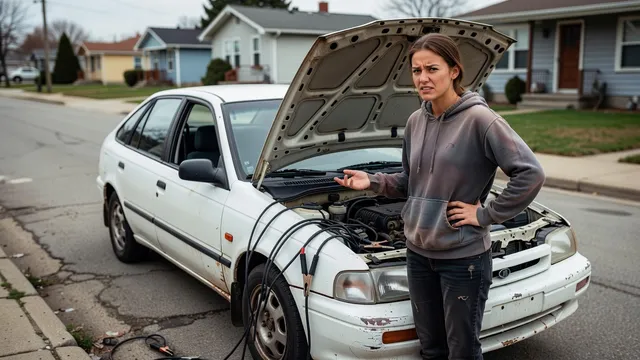
Is my car worth fixing? Fix it when the repair costs well under half of what the car is worth running and nothing else major is about to fail. Sell it as-is when the bill passes that line, or when this repair is the second or third big one this year. Three numbers settle it: the repair quote, the running value and an as-is offer.
Quick answer
Under 50%of the car's value = usually worth fixing
Amica cites AAA for the rule of thumb that a repair should not exceed 50% of the car’s current value. Above that, compare the repair with a free as-is offer and with what a replacement costs you before you pay a shop.The formula: repair quote ÷ running value = X. Under 0.5, fix it. Over 0.5, get an as-is offer first.
Free online quotes and free towing. Compare two offers before you say yes.
Peddle — sell your junk car, running or not
- Get an instant offer online in minutes
- Fast, free pickup, payment on the spot
- Buying cars since 2004, over 4.5 million cars and counting
- Best for
- Most junk cars, including ones without a title
- Payment
- Usually a check at pickup
- No title?
- Sometimes OK. Tell them up front
- Coverage
- All 50 states
Watch for: Offer can drop at pickup if the car does not match what you entered.
CarBrain — buys wrecked and dead cars as-is
- Quote in about 90 seconds for many cars
- Offer held for up to 7 days
- Pickup usually 24 to 48 hours after you accept
- Best for
- Accident damage, blown engines, newer cars that died
- Payment
- Check at pickup
- No title?
- Needed in most states
- Coverage
- 48 states (not AK or HI)
Watch for: Needs the title in your name in most cases. Missing parts lower the price.
The 50% rule: the fastest repair-or-sell check
Divide the repair quote by the car’s current value. Under 0.5, the repair usually makes sense. At 0.5 or higher, stop and run the full math below. Amica attributes the 50% guideline to AAA, and Peddle’s repair-or-sell page draws the same line.
A worked example
Say the car brings $6,000 running and the shop quotes $3,500 for a transmission. That is 58% of the car’s value, so the rule says pause. Amica uses that same example and calls the repair hard to justify. Now say the quote is $1,200. That is 20%, and fixing wins unless the car has other problems waiting.
Where the rule misleads you
The rule compares the repair with resale value, not with the cost of replacing the car. A paid-off car that needs one $2,500 repair can still beat a car payment. The rule also ignores the next failure. An old car that needs one big repair often needs another, so leave room for it.
How to get the three numbers
You need all three before you decide. Each one takes minutes, and none costs anything except the shop diagnosis.
1. A written repair quote
Get an itemized quote from a shop that actually diagnosed the car, with parts and labor listed separately. For any big job, get a second quote. Shops disagree on whether a part needs repair or full replacement, and that swings the bill.
2. The running value
Look up the private party value in fair condition on Kelley Blue Book or Edmunds, then check local listings for the same year, trim and mileage. Use what the car sells for, not what you paid or still owe.
3. The as-is value
Request free offers from online buyers and call one local yard. That number is what you walk away with if you skip the repair. Sell Car Advisor’s 2026 quote data puts a car that won’t start about 48% below a comparable car that drives. The floor is scrap: yards pay about $140–$200 a ton as of September 2026, per iScrap. Our junk car value calculator works out that floor for your car type. If an insurer already declared the car a total loss, the choice changes: read how to sell a totaled car.
Should I repair or sell my car? The formula
Running value, minus the repair bill, minus the best as-is offer. If the result is clearly positive, the repair pays. If it lands near zero or below, sell.
| Car A | Car B | |
|---|---|---|
| Running value | $6,000 | $3,000 |
| Repair quote | $1,200 | $2,500 |
| Best as-is offer | $1,500 | $600 |
| Running value − repair − as-is offer | +$3,300 | −$100 |
| Decision | Fix it | Sell as-is |
Running value
Repair quote
As-is offer
ResultFix it
Running value
Repair quote
As-is offer
ResultSell as-is
These are example numbers, not quotes. Plug in your own. Car B also fails the 50% rule, since $2,500 is 83% of $3,000.
What big repairs cost
Engines and transmissions are the repairs that push most cars past the 50% line.
Engine replacement
Family Handyman (March 2025) puts a used 4-cylinder engine at $1,000 or less, a rebuilt one near $2,500 and a new one from about $4,000. Labor adds $1,100–$1,800 for a typical 10–12 hour job. Read our guide to selling a car with a blown engine for the as-is side.
Transmission replacement
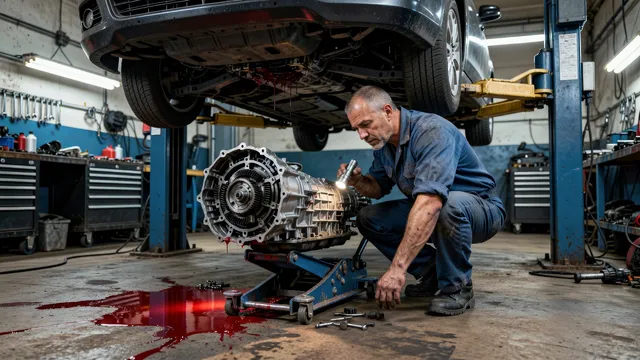
Kelley Blue Book puts a transmission replacement at $2,900–$7,100. On a car worth $6,000 or less, that alone breaks the 50% rule. See what buyers pay for a car with a bad transmission.
When is it not worth it to repair a car?
Is it worth fixing? Not when one of these is true, even if the shop says the car will run fine afterward.
When repairs cost more than the car is worth
If the repairs cost more than the car is worth, the money is gone the day you pay it. That is close to how the law defines a wreck: federal law calls a car salvage when the repair bill plus its salvage value tops what it was worth before the damage, and Texas defines a car as salvage once repairs exceed its pre-damage cash value. A car you’d have to rebuild to be worth less than the bill is a car to sell as-is.
When to stop putting money into a car
One big repair on a sound car is a cost of ownership. A string of them is a pattern. Stop when the second or third major bill lands in the same year, or when the bills keep coming on a high-mileage car. The “$3,000 rule” is one way to put a number on it: Autoblog (October 2025) frames it as yearly spending, so past 150,000 miles and more than $3,000 a year in repairs, it’s time to replace the car. Add up the last twelve months of receipts before the next estimate, not just the one in your hand.
Is it worth repairing a car after an accident?
After a crash, the decision may not be yours. If insurance is paying, the insurer decides whether the car is a total loss, and the state decides whether the title gets a salvage brand. If it’s totaled, you’re choosing between the settlement and keeping the wreck, which our guide to selling a totaled car works through. If it isn’t, run the same three numbers on this page, with the repair estimate minus what insurance covers.
Failed state inspection for rust: fix or junk?
If the rust is structural, usually junk it or sell it as-is. Frame and floor rot isn’t a bolt-on part. It means cutting out metal and welding in new, and the quote often lands above what an old car is worth. Pennsylvania’s rules show how strict it gets: inspectors reject a car whose frame is “not in solid condition” or has rotted or broken components, or whose floor pan is rusted through enough to endanger occupants or let exhaust in.
Only some states check. About a dozen still require periodic safety inspections on passenger cars, including Pennsylvania, New York, Massachusetts, Virginia, Maine, Vermont and Hawaii, per Wikipedia’s state list (checked October 23, 2026). Texas dropped the safety inspection for non-commercial cars on January 1, 2025, per Texas DPS, though emissions tests still apply in some counties. Confirm the current rule with your state.
Run the 50% rule on the written welding quote, not a guess. One seller on r/carselling says underside damage would have cost about $9,000 to pass inspection, so he sold the 12-plus-year-old car to Peddle for $1,370 (October 2026). That’s one person’s numbers, so get your own quote before you decide.
If you sell, keep the inspector’s failure sheet and describe the rust in the offer form so the price holds at pickup. Your options are an online offer, a yard by weight, or a private “mechanic’s special” sale where the buyer knows it won’t pass. Selling a non-running car covers the same routes.
Fix it or replace it: compare against a new payment
When to buy a new car vs repair the old one comes down to monthly cost. When the repair fails the 50% rule but the car is otherwise solid, compare the repair with what the next car costs you. AAA’s 2026 Your Driving Costs study, released September 15, 2026, puts owning and running a new car at $12,863 a year, or $1,071.92 a month, counting fuel, maintenance, repairs, tires, license and registration fees, taxes, depreciation and finance charges over five years and 75,000 miles. AAA says methodology changes mean the 2026 number is not directly comparable with its 2025 estimate.
When fixing wins
- The car is paid off and the rest of it is sound.
- The repair buys at least a year of reliable driving for less than a few months of new-car costs.
- You know the car’s history and nothing else is close to failing.
When selling wins
- The quote passes half the car’s value and other repairs are coming.
- The car needs a second big repair within a year of the first.
- The as-is offer plus the money you skip spending covers most of a down payment on something reliable.
How to sell the car instead of fixing it
Sell it as-is. Don’t put money into a repair just to sell. Peddle and CarBrain both buy damaged and non-running cars and tow for free, per their own pages, and CarBrain requires a title in your name. Get two online offers, call one yard and take the highest number you can back with a title. Our guide to selling a non-running car covers towing, paperwork and pickup day.
Your next step
Get the repair quote in writing, look up the running value and request two as-is offers today. Run the formula. If the repair clears the math with room to spare, fix it. If it doesn’t, compare junk car buyers and sell before the car loses more value sitting in the driveway.
FAQ
Is my car worth fixing?
Fix it when the repair costs well under half of what the car is worth running and the rest of the car is solid. Amica cites AAA for the rule of thumb that repairs should not exceed 50% of the car's current value. Above that line, get an as-is offer and compare it with the repair before you pay a shop.
What is the 50% rule for car repairs?
It says a single repair should not cost more than half of the car's current market value. Amica attributes the guideline to AAA, and Peddle's repair-or-sell page uses the same 50% line. Treat it as a starting point, then check the car's other problems and what a replacement costs you.
How do I find out what my car is worth for a repair decision?
Look up the private party value in fair condition on Kelley Blue Book or Edmunds, then check local listings for the same year and trim. For the broken side of the math, request free as-is offers from online buyers, which takes minutes. Our junk car value calculator gives you the scrap floor.
Is it worth replacing an engine or transmission in an old car?
Usually not. Family Handyman puts a used 4-cylinder engine at $1,000 or less, a rebuilt one near $2,500 and a new one from about $4,000, plus $1,100–$1,800 in labor. KBB puts a transmission replacement at $2,900–$7,100. On an older car, either bill often passes half the car's value.
Should I fix my car or buy a new one?
Compare the repair with what a replacement costs you, not just with the old car's value. AAA's 2026 Your Driving Costs study puts owning and running a new car at $12,863 a year, about $1,072 a month. A $2,000 repair that buys a reliable year often beats that. Repeated big repairs do not.
What is the $3,000 rule for car repairs?
It is a yearly spending test, not a per-repair one. Autoblog (October 2025) frames it this way: once a car is past 150,000 miles and repairs run more than $3,000 a year, it's time to replace it. Use it alongside the 50% rule. A single repair can pass the 50% check while the year's total still fails the $3,000 rule.
What if the repairs cost more than the car is worth?
Then fixing it usually loses money, and selling as-is is the better move. A repaired car is still worth only its running value, so the extra spending doesn't come back. Federal law treats a car whose repair bill plus salvage value tops its pre-damage value as salvage. Request free as-is offers, compare them with scrap value and sell.
Sources we checked
- Autoblog: the $3,000 rule, when to keep your car and when to trade (October 2025)
- 49 U.S.C. 30501: salvage automobile definition
- Amica: should you repair or replace your car? (cites AAA's 50% guideline)
- AAA: Your Driving Costs 2026 ($12,863 a year for a new car)
- Peddle: should I sell my car or repair it? (the 50% rule)
- Kelley Blue Book: transmission repair and replacement prices
- Family Handyman: how much it costs to replace an engine (March 2025)
- Sell Car Advisor: how to sell a non-running car (2026 quote data)
- iScrap: complete car scrap price per ton
- 67 Pa. Code 175.80: Pennsylvania inspection procedure (frame and floor pan rejection criteria, read 2026-10-23)
- Wikipedia: vehicle inspection in the United States (state list, read 2026-10-23)
- Texas DPS: vehicle safety inspection changes take effect January 2025
- CarBrain FAQ: title, towing, minimum standards, payment

Written and fact-checked by the Junk Car Worth team. Prices and buyer policies checked October 2026. How we estimate value.