On this page
- Is it worth selling a car for parts? The decision rule
- Which car parts are worth money in 2026
- What parting out costs in time, tools and paperwork
- What to do with the shell after the parts are gone
- Sell car for parts or sell it whole: the numbers side by side
- How to sell a car for parts, step by step
- Mistakes that cost sellers money
- Get your baseline offer before you touch a wrench
You can sell a car for parts, and on paper it pays more than scrap. In practice, most junk cars are worth more sold whole. The three parts with real money in them (engine, transmission, catalytic converter) are the same three a whole-car buyer wants left on the car. Pull them and an easy offer turns into a stripped shell you still have to move.
Quick answer
Sell it wholeunless you have tools, time and buyers
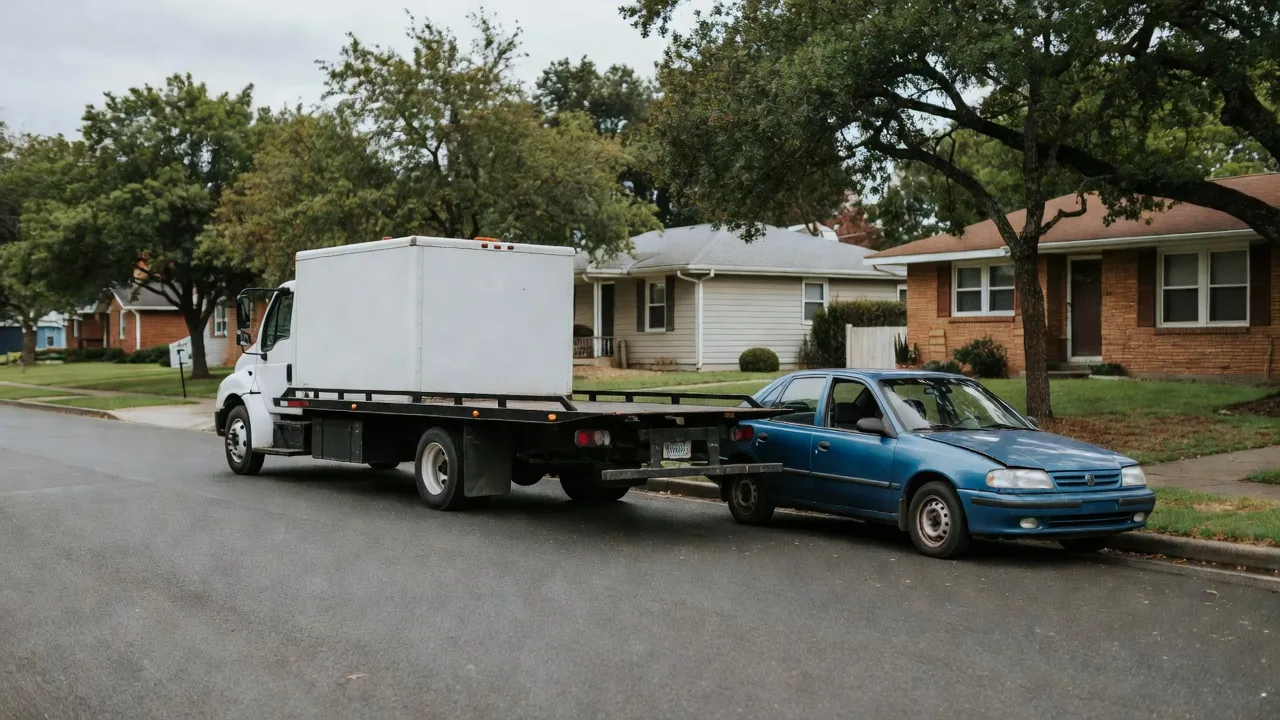
CarBrain says the average junk car gets $250 to $750, and pickup averages 24 to 48 hours after you accept. Part it out only if you already have buyers for the big parts, a hoist and somewhere to store what does not sell.Free online quotes. Free towing. Compare two offers before you say yes.
 Best overall Towing: free
 Peddle
Instant online offer for junk, damaged, and running cars in all 50 states.
- Best for
- Most junk cars, including ones without a title
- Payment
- Usually a check at pickup
- No title?
- Sometimes OK. Tell them up front
- Coverage
- All 50 states
- Offer shows on screen in a few minutes
- No fees. Towing and title transfer included
- Cancel any time, even after you accept
Watch for: Offer can drop at pickup if the car does not match what you entered.
Get my Peddle offer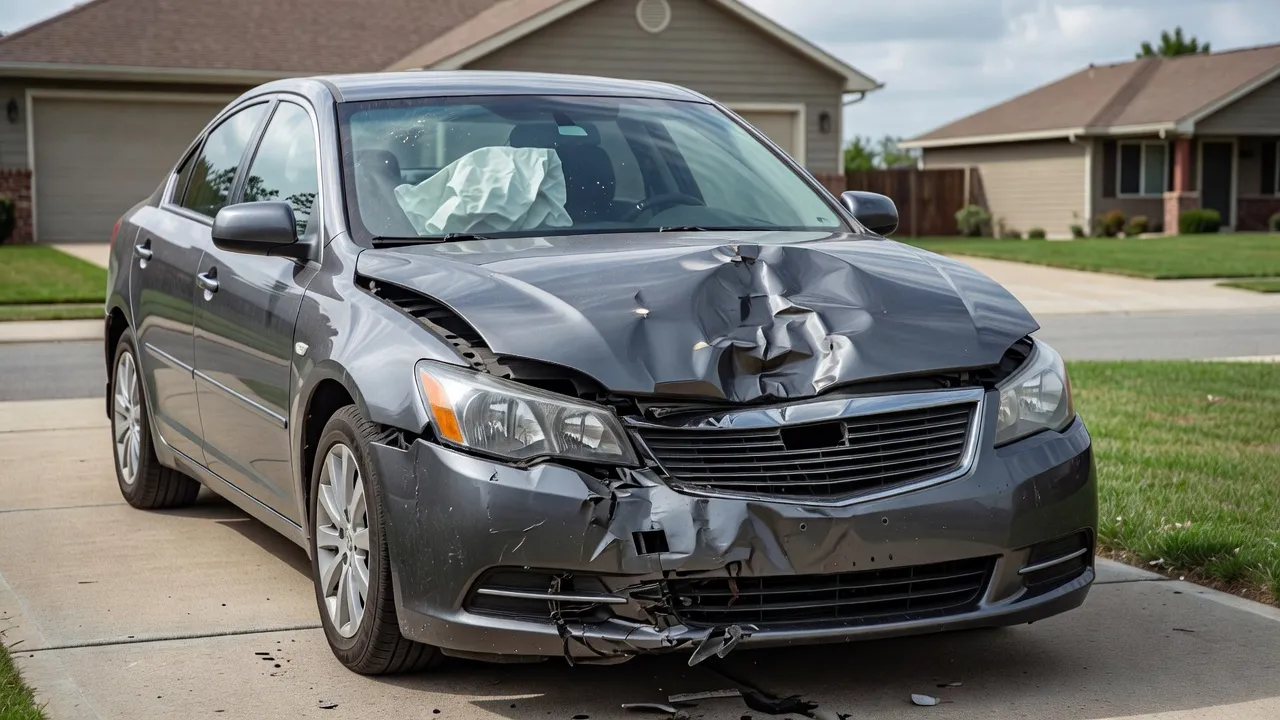 Best for wrecked cars Towing: free
 CarBrain
Buys wrecked, flooded, and mechanically dead cars as-is, often for more than scrap.
- Best for
- Accident damage, blown engines, newer cars that died
- Payment
- Check at pickup
- No title?
- Needed in most states
- Coverage
- 48 states (not AK or HI)
- Quote in about 90 seconds for many cars
- Offer held for up to 7 days
- Pickup usually 24 to 48 hours after you accept
Watch for: Needs the title in your name in most cases. Missing parts lower the price.
Get my CarBrain offerWe earn a commission if you sell through some links on this page. It never changes what we recommend. How we make money.
Is it worth selling a car for parts? The decision rule
Usually not, and even the recycler with the boldest claim hedges it. In a 2016 post, Zores Recycling in Indianapolis says you can make triple the money selling parts, then adds that it takes a lot of time, manpower and personal money, and that most people sell whole. Cash Auto Salvage says parting out almost never beats selling whole unless you have buyers lined up plus the time and tools to pull parts cleanly. Both buy junk cars, so weigh their motives and take the numbers from the table below.
Parting out makes sense only when what your parts sell for, minus your costs and minus what the shell loses, beats the whole-car offer by enough to pay for your weekends.
Sell it whole if any of these are true
- You do not own a jack, jack stands and an engine hoist, or have a safe place to use them.
- You need the car gone this week. CarBrain says pickup averages 24 to 48 hours after you accept.
- The car does not start, so nobody can watch the engine run. Our page on selling a non-running car covers that case.
- You would have to hire the work out. CarBrain’s 2019 parting guide puts labor at $80–$100 an hour.
Part it out only if all of these are true
- A buyer is waiting for the engine, transmission or other big parts: a rebuilder, a shop, or another owner on a model forum.
- You can pull them yourself, with a helper, without breaking them.
- You can hold leftover parts for weeks and answer strangers’ messages the whole time.
- You have the title and a plan for the shell before the first bolt comes off.
Which car parts are worth money in 2026
Three parts carry real money. Self-service yards price by part category, not by car, and this table shows what they charge buyers (Junkyard Inventory, September 12, 2026). That is a ceiling for your private listing, not your payout. The last column shows what the same piece brings as scrap (iScrap and RRCats).
| Part | Yard price to buyers | As scrap instead |
|---|---|---|
| Engine, complete | $400–$1,800 | Weighs in with the shell |
| Transmission | $300–$1,200 | Weighs in with the shell |
| Catalytic converter | Not in that guide | $103.30 average, $15–$1,150 by type |
| Alloy wheel | $40–$90 each | About $0.95 per lb |
| Door, complete | $75–$150 | Weighs in with the shell |
| Hood | $60–$120 | Weighs in with the shell |
| Front seat | $40–$100 | Weighs in with the shell |
| Radiator | $30–$60 | Counts toward a complete car |
| Alternator | $25–$45 | About $0.46 per lb |
| Car battery | Not in that guide | About $0.20 per lb ($6–$15) |
Read it the way a buyer does. Apart from the engine and transmission, nothing on that yard list tops $150, and each piece still needs photos, a listing, a buyer and often a shipping box.
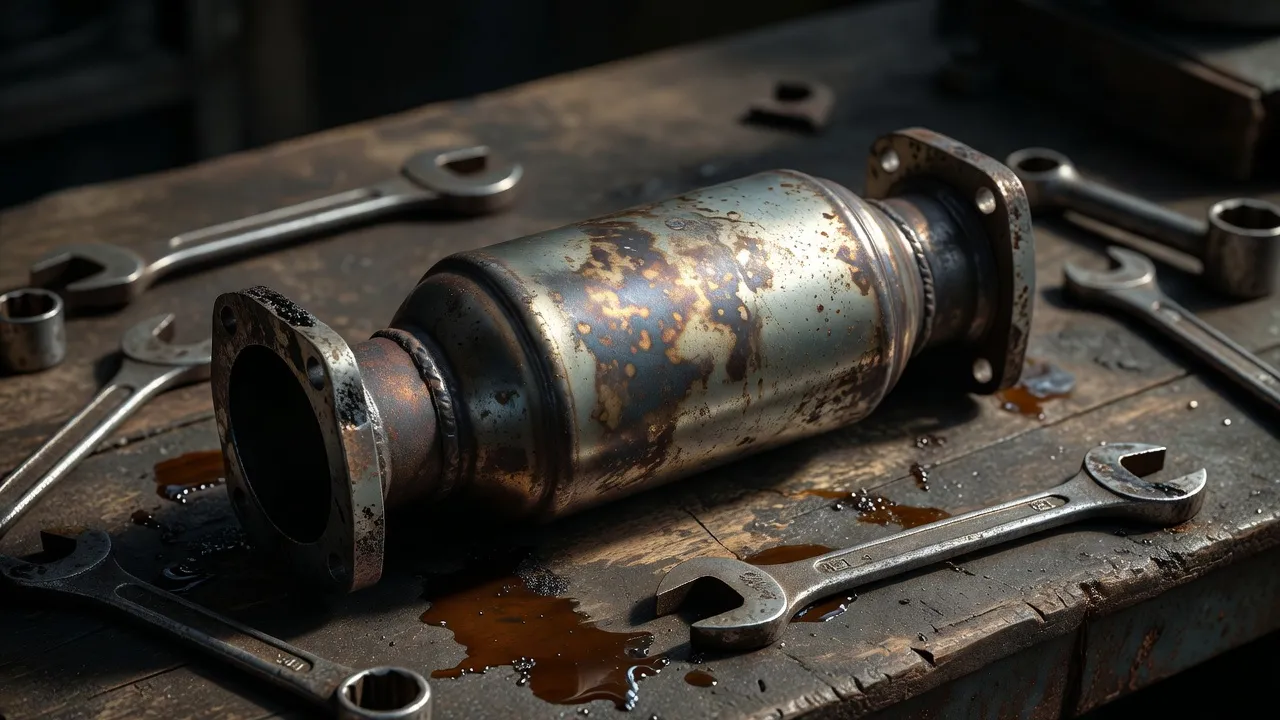
The catalytic converter: biggest single part, riskiest to pull
Converter buyer RRCats lists a $103.30 national average as of September 30, 2026, with types running from $15 to $1,150, and calls its prices guidelines only. Cash Auto Salvage claims $150–$800 for most 2000-and-newer cars, an unaudited vendor figure well above that average.
Peddle says a missing converter can cut a car’s value by 30% or more, and iScrap warns that selling it separately could make yards treat your car as incomplete. The law adds a hurdle. Under California’s AB 1740, a converter recycler may buy from a private owner only if the converter is permanently VIN-marked and the owner’s title matches, and payment must be traceable, not cash. Those rules cover loose converters, and other states have their own. Check yours.
Our catalytic converter scrap price page has the ranges and the sell-it-separately math. Short version: leave it on the car.
Engine and transmission: the money and the muscle
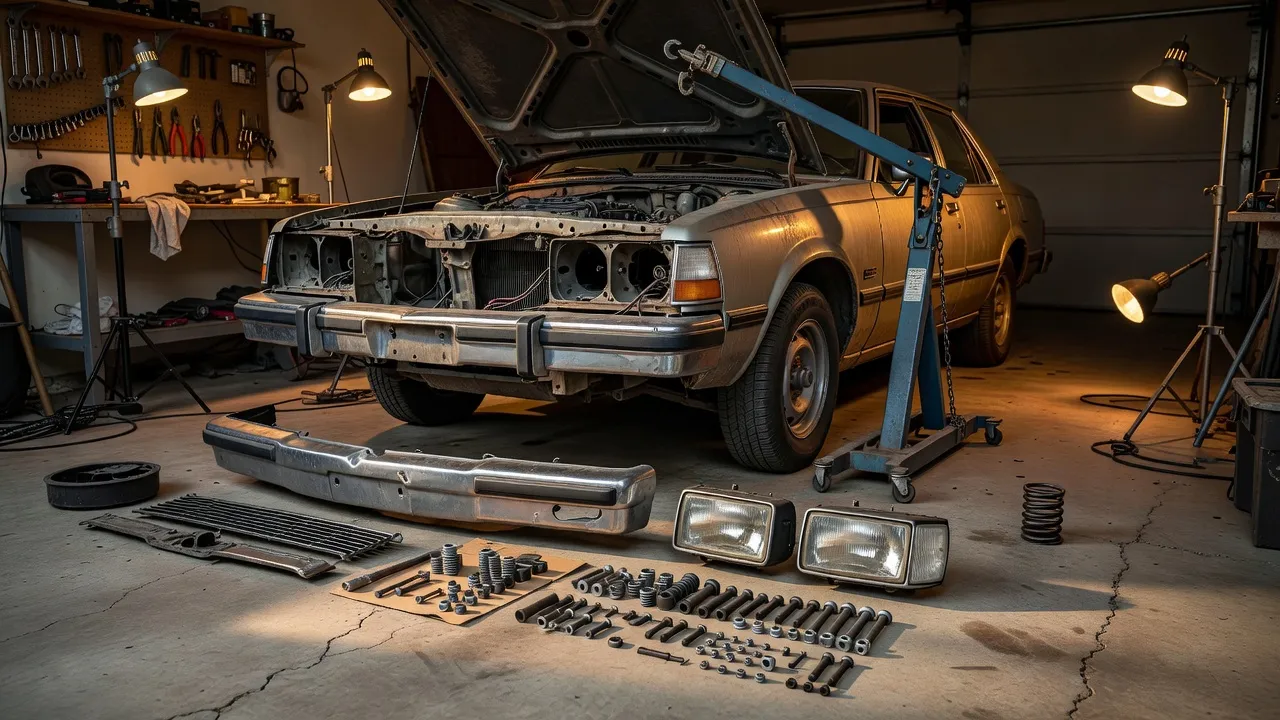
Cash Auto Salvage says an engine can bring $400–$1,500 from a rebuilder (May 2026), and that figure assumes the engine starts and runs, even barely. Getting it out takes a hoist, a helper and a lot of care. Zores adds that a part damaged on the way out is worthless.
If the drivetrain is already dead, the parts case falls apart. Whole-car buyers still take those cars: CarBrain lists blown or seized engines and transmission failure among the problems it buys as-is. We cover both in our guides to selling a car with a blown engine and a car with a bad transmission.
Wheels, battery and small parts
Alloy wheels list at $40–$90 each at yards. As scrap, iScrap shows aluminum rims near $0.95 per lb with the tires off, and Cash Auto Salvage says a set of four brings $80–$200. A car battery scraps at about $0.20 per lb, so $6–$15 for a 30–75 lb unit (our arithmetic from iScrap’s battery page). Alternators and starters list at $20–$45.
None of that is worth a second trip. iScrap counts the battery, rims, tires and radiator as part of a complete car, so taking them off could push your shell into a lower rate.
What parting out costs in time, tools and paperwork
Time, tools and labor
Parts money arrives slowly. CarBrain’s 2019 guide says that after the engine and transmission sell, it could take years to sell the rest. It also lists storage and constant haggling as costs. CarBrain buys whole cars, so weigh the source.
Add the tools you do not own, space to work, and parts that lose value when pulled badly. Then everything needs somewhere to sit until a buyer shows up.
Finding buyers without getting burned
A Reddit thread that ranks first for this search points sellers to Craigslist, local model forums and eBay. That fits: the buyer for a Pontiac door lives on a Pontiac forum. Scrap yards pay by weight for the car, and Peddle’s terms say it does not handle loose parts, scrap metal or liquids, so neither takes a pile of parts off your hands.
Watch for the fake-check scam. The FTC describes it: a buyer sends a check for too much and asks you to refund the difference, then the check turns out fake weeks later and you owe the bank. Take verified payment and never refund an overpayment.
Licenses and paperwork
Dismantling for profit can cross into licensed territory. California’s DMV requires a dismantler license to deal in used vehicle parts or nonrepairable vehicles, but exempts owners who dismantle three or fewer personal vehicles in a 12-month period. A Pittsburgh attorney’s Avvo answer from February 2023 says Pennsylvania requires a license to run a junkyard that dismantles autos and resells the parts, and that he does not believe one is needed to sell a junker to a yard. He also tells private sellers to state clearly that every part is sold as is. Rules differ by state, so call your DMV before you list a second or third car. This is general information, not legal advice.
Keep the title until the shell is gone. CarBrain says it requires a title in the seller’s name, and iScrap says yards require one in most states. If yours is missing, read about selling a junk car without a title.
What to do with the shell after the parts are gone
Once the good parts are off, the rest sells by weight. Most US yards pay about $140–$200 per ton for a complete car, with a national average near $178 (iScrap, September 2026). A complete 3,000 lb car works out to about $266 at that average, or $210–$300 across the $140–$200 range (our arithmetic). A stripped shell weighs less, and iScrap says missing parts push you into a lower “incomplete” rate without giving a number. Our scrap car prices page has the per-ton picture.
Who still buys a car with parts missing
Peddle says it buys cars missing parts, but its terms let it recalculate the offer or refuse pickup when a major component is missing or removed, even one you never mentioned. CarBrain says a car without its engine or transmission does not meet its minimum standards, though a missing bumper, headlights or radio is fine. Wheelzy says it takes cars with missing parts as long as the engine and transmission are still there.
Local yards may take a stripped car, so call and ask about the incomplete rate and towing. iScrap says free towing is offered where available. Our list of junk car buyers covers the companies that buy the whole car.
Selling parts of my car and keeping the big three
If you only want to sell parts of your car, take off the extras and leave the essentials. Extras are aftermarket add-ons such as a stereo or a roof rack. Essentials are the engine, transmission, exhaust and converter.
Wheels, tires and battery are borderline. Peddle checks them at pickup, and iScrap counts them toward a complete car. Whatever you pull, say so in the offer form, so a mismatch at pickup cannot start an argument.
Sell car for parts or sell it whole: the numbers side by side
Here is a 3,000 lb junk car three ways. The whole-car and scrap figures come from published sources. The parts column has no fixed number, because it starts from yard prices, not payouts.
| Sell whole | Part it out | Scrap it | |
|---|---|---|---|
| Cash | $250–$750 average (CarBrain) | Parts you sell, minus costs | About $266 at the iScrap average (our arithmetic) |
| Effort | Online form and a pickup | Weekends of pulling, listing and haggling | A few calls |
| Time to cash | Pickup averages 24–48 hours after you accept, paid at pickup | No fixed date; small parts can take years (CarBrain) | Varies by yard |
| Tools and space | None | Hoist, stands, storage | None |
| Main risk | Offer changes if the car is not as described | Parts do not sell, shell loses value | Yard pays the lower incomplete rate |
CarBrain’s 2019 guide gives the math. A buyer might pay $600 for the engine, and pulling it can easily cost $500–$700 in labor. Do it yourself and you keep the $600 but lose the weekend. Hire it out and you clear about nothing, while the rest of the car is worth less because a major component is gone.
How to sell a car for parts, step by step
If the numbers still favor parting out, do it in this order.
- Get a whole-car offer first. It is free, takes minutes, and you can turn it down. That number is what your parts have to beat.
- Price every part against real listings. Use the table above as the ceiling, then check what the same part is listed for near you. Count only parts you have a buyer for.
- Check your state’s dismantling rules and your title. Do this before you list anything, especially if this is not your only car.
- Line up the shell buyer. Know who takes a stripped car and what they pay before you pull the first part.
- Photograph the car and each part. Record the VIN, mileage and any damage, and keep the pictures with every listing.
- Sell the engine and transmission first. They carry the money. The small stuff can wait or go with the shell.
- Take safe payment. Verified funds, no refunded overpayments, hand-offs in public.
- Tell the shell buyer what is gone. Update the offer form or call the yard, then move the car.
Mistakes that cost sellers money
- Pulling parts before checking the offer. Once the engine is out, some buyers will not take the car at all.
- Counting yard prices as your payout. Those are what yards charge buyers. Private buyers haggle.
- Forgetting the shell. A stripped body still has to be towed, and the tow may not be free.
- Hiding what is missing. A seller’s June 2026 BBB complaint says a $470 CarBrain offer fell to $250 at pickup because the converter was missing. CarBrain replied that the submitted details did not match the car.
Check for a lien before you sell anything
If you still owe money on the car, the lender has a claim on it. Peddle says liens must be resolved with the lienholder before the sale. Pay it off or get the lender’s release first, or the whole plan stalls.Get your baseline offer before you touch a wrench
Do this first, whatever you decide about parts.
- Run the junk car value calculator for a quick range.
- Get free offers from Peddle and CarBrain below. Answer the condition questions honestly, including anything already missing. Both offers are free, and you can decline them.
- Have the title ready. Our guide to selling a junk car walks through the paperwork.
- Compare. If parting out beats the higher offer by a few hundred dollars after your costs, and you have the buyers, go. If not, take the offer.
Free online quotes. Free towing. Compare two offers before you say yes.
Best overall Towing: free Peddle
Instant online offer for junk, damaged, and running cars in all 50 states.
- Best for
- Most junk cars, including ones without a title
- Payment
- Usually a check at pickup
- No title?
- Sometimes OK. Tell them up front
- Coverage
- All 50 states
- Offer shows on screen in a few minutes
- No fees. Towing and title transfer included
- Cancel any time, even after you accept
Watch for: Offer can drop at pickup if the car does not match what you entered.
Get my Peddle offer Best for wrecked cars Towing: free CarBrain
Buys wrecked, flooded, and mechanically dead cars as-is, often for more than scrap.
- Best for
- Accident damage, blown engines, newer cars that died
- Payment
- Check at pickup
- No title?
- Needed in most states
- Coverage
- 48 states (not AK or HI)
- Quote in about 90 seconds for many cars
- Offer held for up to 7 days
- Pickup usually 24 to 48 hours after you accept
Watch for: Needs the title in your name in most cases. Missing parts lower the price.
Get my CarBrain offerWe earn a commission if you sell through some links on this page. It never changes what we recommend. How we make money.
FAQ
Is it worth selling a car for parts?
Usually not for a typical junk car. Zores Recycling in Indianapolis wrote in 2016 that parts can bring triple the money but take a lot of time, manpower and personal money. Most common parts other than the engine and transmission list for $20–$150 at self-service yards (Junkyard Inventory, September 2026), and CarBrain's 2019 guide puts the labor to pull an engine at $500–$700. Part it out only if you already have tools, buyers and time. Otherwise take a whole-car offer.
How do I sell my vehicle for parts?
Get a whole-car offer first, so you know the number to beat. Then price each part against real listings, confirm your state's dismantling rules and your title, and line up a buyer for the shell before you pull anything. List each part with photos, take verified payment, and never refund an overpayment. The numbered steps in this guide give the full order.
How much will a scrap yard pay for a car?
Most yards pay by weight: about $140–$200 per ton, with a national average near $178 (iScrap, September 2026). At $177.58 per ton, a 3,000 lb car is worth about $266 (our arithmetic). Yards pay less for a car missing key parts such as the engine, converter or wheels. Individual yard reports over the past year ran from about $105 to $250 per ton.
What is the $3,000 rule for cars?
It is a rule of thumb, not an official standard. When a major repair approaches $3,000, look harder at the car's value, condition, reliability and likely future repairs before you pay, according to Last Chance Auto Repairs. If the repair costs more than the car would fetch sold whole, get a junk-car offer before you spend the money.
Can I sell parts off my car and still sell the rest?
Yes, if the parts are extras. CarBrain's FAQ says a missing bumper, headlights or radio is acceptable, but a car without its engine or transmission does not meet its minimum standards. Peddle's terms let it recalculate the offer or refuse pickup if a major component is missing or removed. Tell the offer form exactly what is gone.
Do I need a license to sell used car parts?
It depends on your state and how many cars you dismantle. California's DMV requires a dismantler license to deal in used vehicle parts, but exempts owners who dismantle three or fewer personal vehicles in 12 months. Other states differ, so confirm with your DMV before you list a second or third car. This is general information, not legal advice.
Sources we checked
- Junkyard Inventory: what junkyard parts cost (Sept 12, 2026)
- iScrap: complete car scrap price
- RRCats: catalytic converter scrap prices (Sept 30, 2026)
- CarBrain: selling your car for parts, is it worth it (2019)
- CarBrain FAQ: missing parts and title rules
- Peddle terms: conditions checked at pickup
- California DMV: dismantler license
- Cash Auto Salvage: which parts pay the most (May 2026)

Written and fact-checked by the Junk Car Worth team. Prices and buyer policies checked September 2026. How we estimate value.